Timely diagnosis and appropriate treatment enable children to have normal development, better function, and a higher quality of life.
Pediatric plastic and reconstructive surgery covers the treatment of congenital and acquired conditions that can affect a child's function, appearance, and psychosocial development. Among the conditions requiring expert assessment, congenital hand anomalies, ear deformities, and melanocytic or pigmented nevi stand out.
Congenital hand anomalies
Congenital hand anomalies occur due to disruptions in the formation of the upper extremities during embryonic development. They can occur in isolation or in conjunction with other congenital anomalies and genetic syndromes.
Among the most common conditions are syndactyly, which is the congenital fusion of two or more fingers, and polydactyly, characterized by the presence of extra fingers.
The goal of treatment is to achieve the best possible functional and aesthetic result. The timing and method of surgical treatment depend on the type and complexity of the anomaly, and interventions are often planned between the sixth and eighteenth month of life.
After surgery, proper scar care, physical therapy, and monitoring of hand function development are essential.
Congenital ear deformities
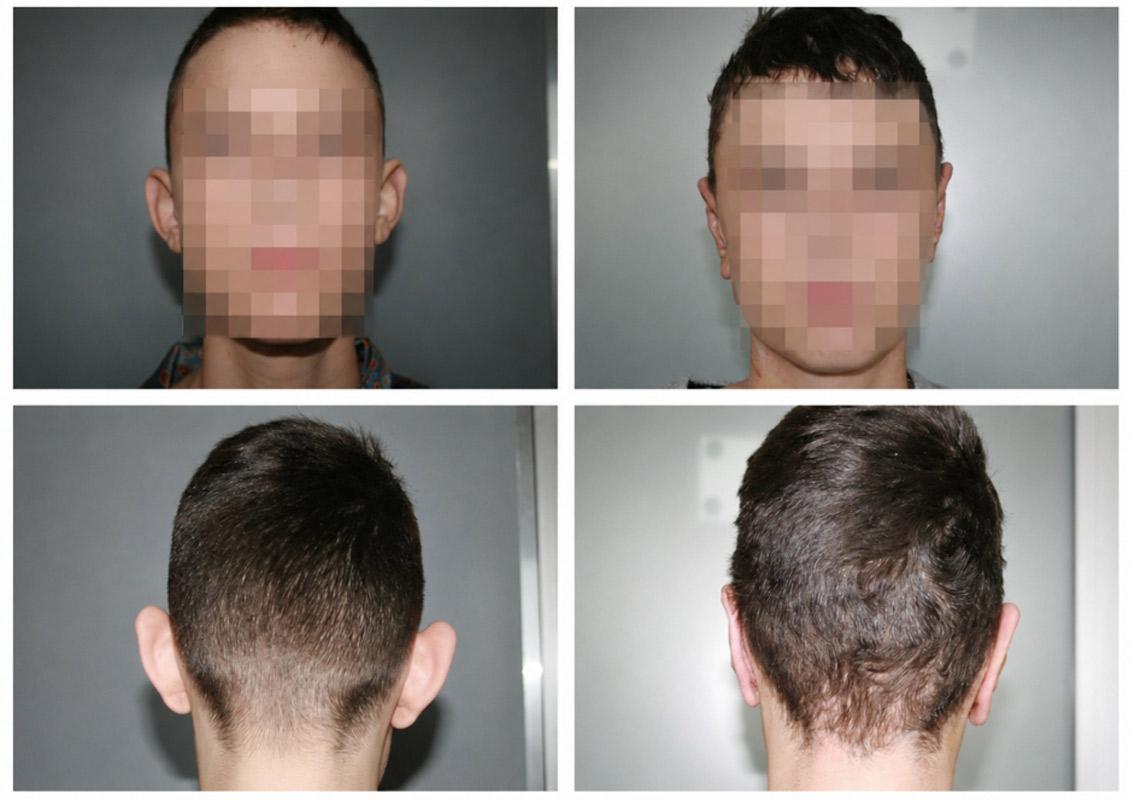
The auricle is one of the most complex anatomical structures of the face. Developmental disorders can lead to various deformities, the most common of which are prominent or protruding ears.
These conditions usually do not affect hearing, but they can have significant aesthetic and psychosocial consequences, especially once a child starts school.
Surgical treatment is usually considered after the age of five, when the development of the ear is sufficiently advanced. The choice of surgical technique depends on the type and degree of the deformity, as well as the child's individual anatomical characteristics.
The goal of the correction is to achieve a natural, harmonious, and symmetrical appearance of the ears.
Melanocytic nevi in children
Melanocytic or pigmented nevi are benign lesions composed of cells that produce the pigment melanin. They can be congenital or appear during childhood.
Most nevi do not require treatment, but regular monitoring is important. Special attention should be paid to changes in shape, edges, color, size, or elevation above the skin surface.
Clinical examination may include a full skin check, photodocumentation, and dermoscopy. When there is a medical, functional, aesthetic, or psychological indication, surgical removal of the lesion and histopathological analysis may be recommended.
For larger congenital nevi, treatment is sometimes carried out in several surgical stages, depending on the size, location, and age of the child.
The importance of timely assessment
The approach to every child must be individual. The decision regarding monitoring or surgical treatment is made after a detailed examination and discussion with the parents, taking into account the functional, aesthetic, and psychological aspects of the lesion.
Timely assessment allows for treatment planning at the most favorable age and contributes to achieving better functional and aesthetic results.
Laser and surgical scar treatment
Scars can form after surgeries, injuries, burns, acne, and other skin damage. Their appearance depends on the healing process, location on the body, and the individual characteristics of each patient.
Treatment is planned individually, depending on the type, age, and functional significance of the scar. Therapy involves non-invasive methods such as silicone products, compression and physical therapy, as well as modern laser treatments.
Fractional CO₂ laser is used to improve the structure, elasticity, and appearance of scars, especially after burns and deeper skin injuries.
When a scar limits mobility or causes significant functional and aesthetic issues, surgical correction may be recommended. In some cases, the best results are achieved through a combination of surgical and laser treatment.
Doc. Dr. Đorđe Kravljanac is a specialist in pediatric surgery with many years of experience in pediatric plastic surgery, pediatric hand surgery, burn and wound treatment, pediatric aesthetic surgery, and laser treatment of skin lesions.
He is the author and co-author of 94 professional and scientific papers, an invited speaker at 38 domestic and international congresses, and a mentor for 11 theses. He has pursued further training in plastic surgery, hand surgery, burn treatment, and laser scar treatment in New York, Zurich, and Madrid.
Doc. Dr. Đorđe Kravljanac will be seeing patients on August 29th and 30th at the Moj Lab hospital in Podgorica.
If you notice any changes in your child or would like a professional opinion on treatment options, schedule an examination and consultation with Assoc. Prof. Đorđe Kravljanac at Moj Lab Hospital.
Information and appointments:
📞 19989
🌐 www.mojlab.me
You can view more treatment examples in our gallery. Please note that these photographs show actual medical cases and may be disturbing.
Visit by clicking: GALLERY

Polyclinic "Moj Lab", with the aim of improving service quality, conducts customer satisfaction surveys. Please answer our questions so that your comments and suggestions can help us improve our services for mutual benefit and satisfaction.